
Code défaut P20E9 : comprendre et réparer le défaut de pression AdBlue
On diesel vehicles equipped with the SCR (Selective Catalytic Reduction) system, the P20E9 code is less frequent than its counterpart P20E8, but just as informative.
Where P20E8 signals a pressure that is too low in the urea circuit, P20E9 indicates the opposite: the pressure is drifting upward, beyond the thresholds permitted by the engine control unit.
But what are the actual causes of this overpressure in the AdBlue system, and how can it be identified quickly before it leads to more serious malfunctions?
An alert signal regarding the SCR system pressure.
The SCR system relies on the precise injection of AdBlue into the exhaust line, at a pressure of approximately 6 bars controlled by the pump of the urea gauge-pump module. This value is constantly monitored by the ECU, which compares the pressure sensor readings to the expected setpoint.
When the powertrain control module detects reductant pressure outside of the nominal values during the injection preparation phase, it records a fault code. In the case of P20E9, it is an upward drift that is reported—not a lack of pressure, but an excess, or at least a value read as being too high compared to the setpoint.
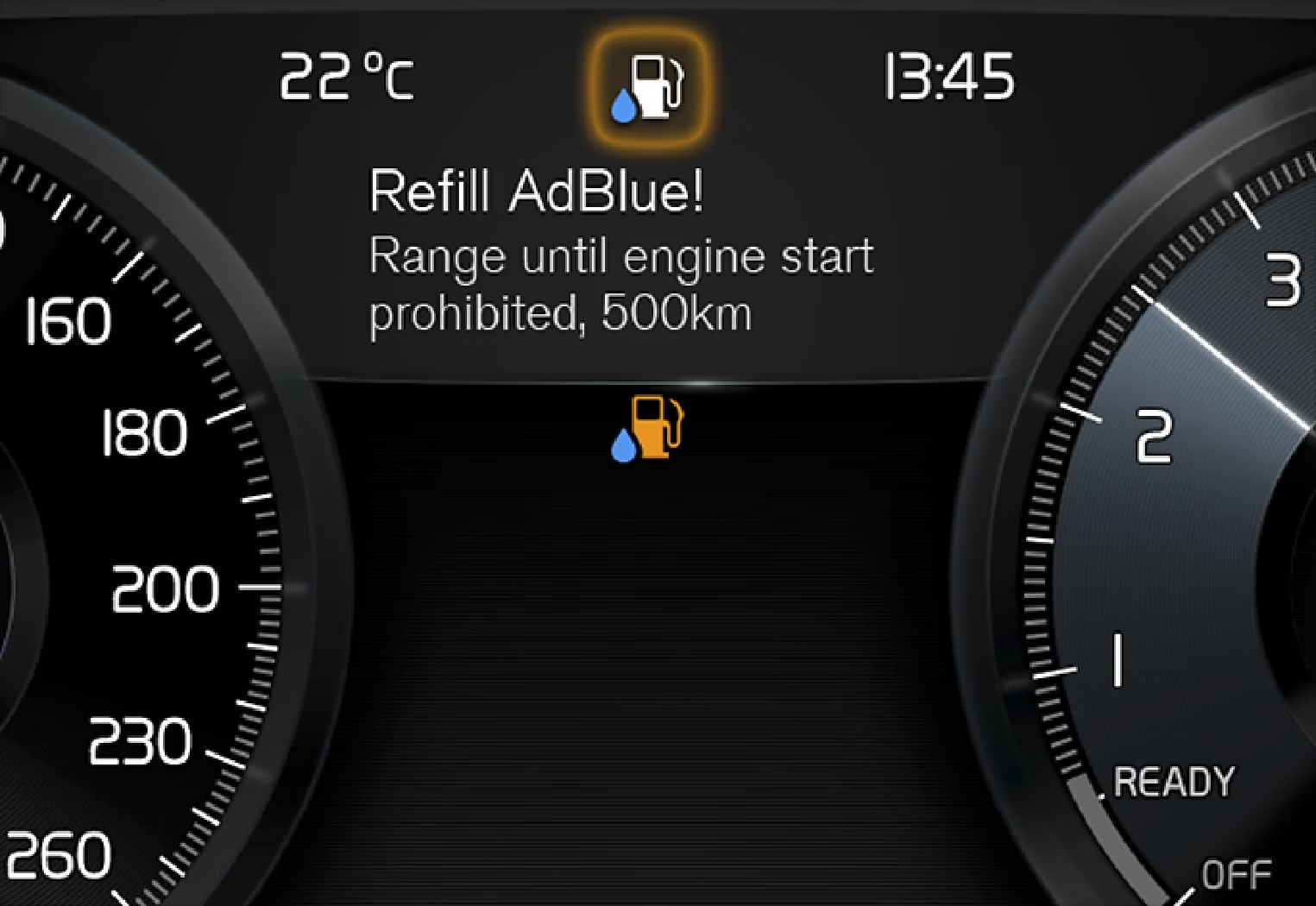
Note: P20E9 may appear in conjunction with P20E8, P3056, or P20F6 on Stellantis Group vehicles.
Behind the P20E9 code, multiple causes.
High pressure in the urea circuit can stem from several malfunctions:
- Faulty pressure sensor,
- Pressure regulator stuck,
- Urea pump out of adjustment,
- Electronic disturbance of the CAN network,
- Partial obstruction of the circuit,
- Corrosion of the pump module.
A reasoned approach to diagnosis
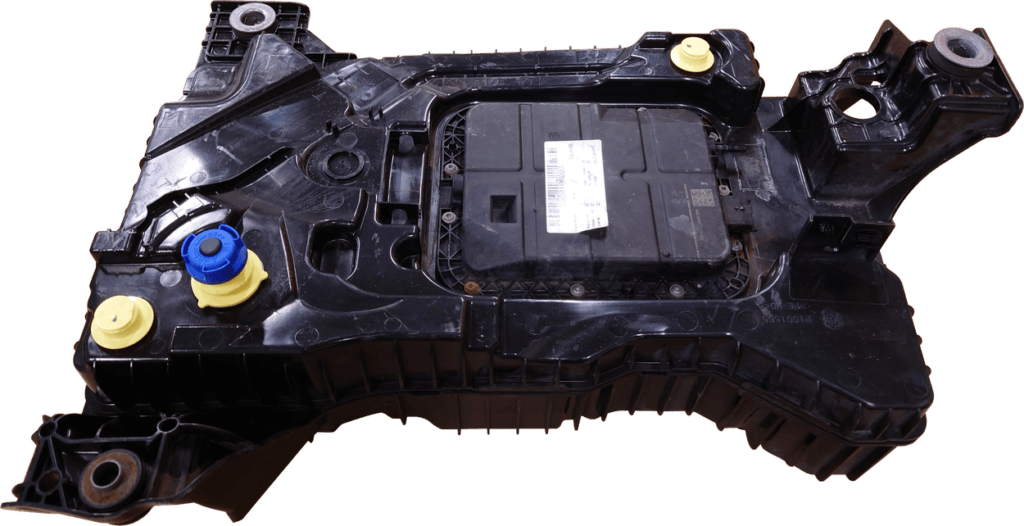
Rather than opting for the fastest but often most expensive solution, certain AdBlue system failures can be addressed more precisely through electronic repair performed by Reparlab. By intervening only on the components that are actually faulty, it is often possible to avoid the complete replacement of the AdBlue module.
This approach also constitutes a more sustainable solution, both economically and environmentally, by extending the lifespan of existing equipment.
Attached, you will find the link to the AdBlue repair solution.
A good preventive practice
Certain behaviors help to preserve the proper functioning of the SCR system:
- Exclusively use ISO 22241 certified AdBlue; a non-standard liquid can damage the pressure sensor and the module.
- Do not let the tank level drop too low, to preserve the pump and limit the risk of crystallization.
- Schedule a diagnostic as soon as the first warning light appears, without waiting for the "starting prohibited" message.
Have questions? Find your answers here!
What does the P20E9 code mean?
The P20E9 code corresponds to an upward drift in urea liquid pressure, detected by the engine ECU as exceeding the expected nominal values of the SCR circuit.
Can the vehicle be driven with this fault?
Initially yes, but a mileage countdown is triggered. At zero, the engine refuses to restart after each stop. It is therefore strongly advised to take action quickly.
Can P20E9 and P20E8 appear together?
Yes, and it is frequent. This coexistence often points toward an unstable pressure sensor that alternates between values that are too high and too low.
Must the AdBlue module be systematically replaced?
No. Depending on the origin of the fault, only the sensor, the regulator, or the module’s electronic board may be at fault. A targeted repair is often possible.
How can this fault be prevented?
Using compliant AdBlue, maintaining a sufficient level in the tank, and performing regular vehicle maintenance significantly limit the risks.