


Home > ABS warning light illuminated? Top 10 ABS Block Failures and Repairs
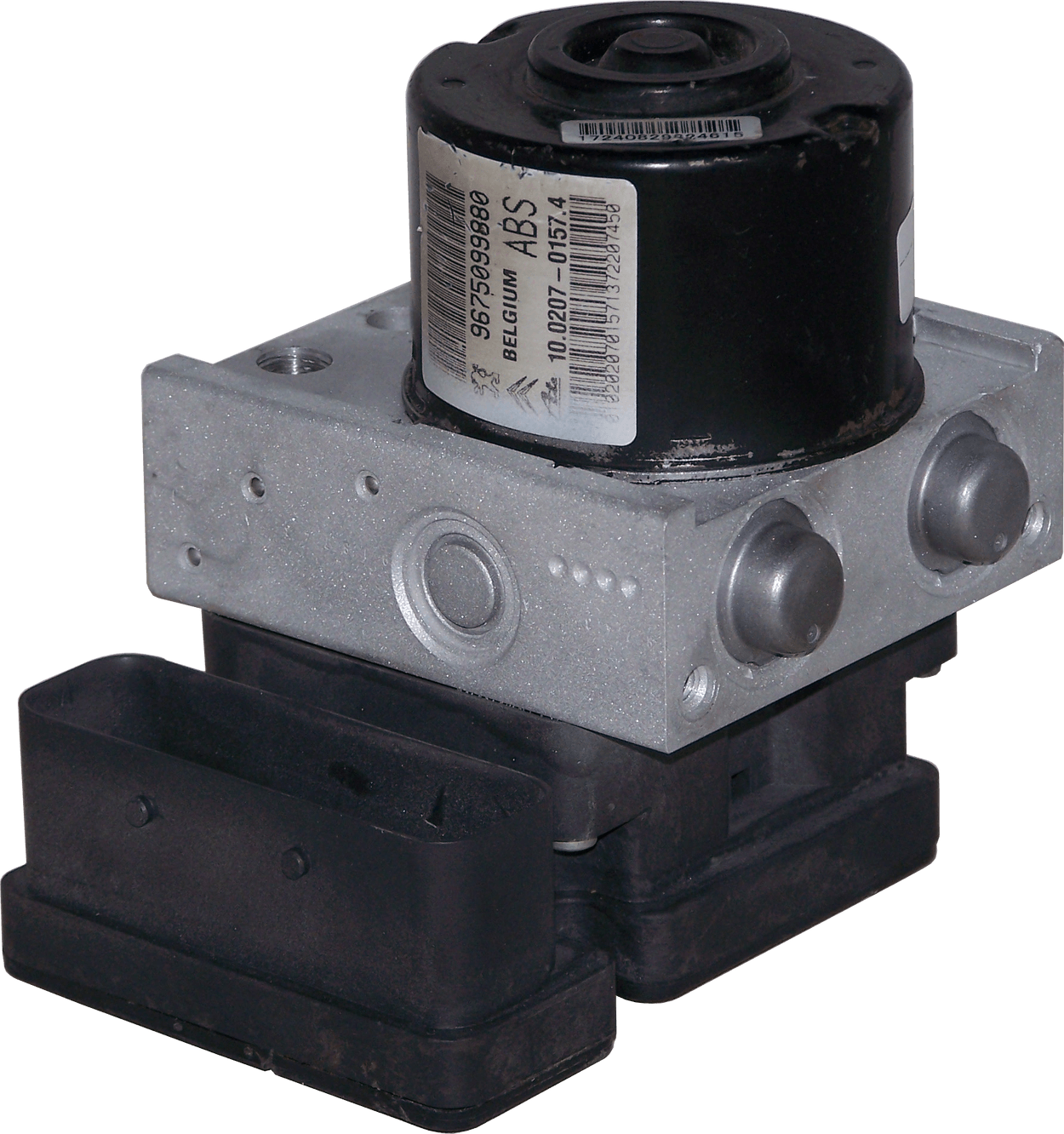
ABS is an essential safety component that prevents wheel lockup during intense braking. It allows the driver to maintain control of the steering wheel where, without it, the tires would slip and make the car uncontrollable.
In this blog, we help you identify the source of your malfunctions and present the expertise of Reparlab by Faurecia Clarion, your expert partner in automotive electronics.
During emergency braking, the ABS acts as an intelligent regulator: it prevents wheel lockup by adjusting hydraulic pressure several times per second. Thanks to sensors that monitor rotational speed in real time, the system releases and then reapplies braking force as soon as a risk of skidding is detected.
This mechanism allows for maintaining maximum adhesion and a stable trajectory, providing a dosing precision that no human could manually match.
Alors, quels sont les 10 problèmes majeurs liés à l’ABS et quelles solutions existent ?
So, what are the 10 major problems related to the ABS and what solutions exist?
Warning light on: The ABS indicator remains illuminated on your dashboard.
Brakes locked: The wheels remain clamped even after releasing the pedal.
Constant pressure: The brake fluid does not return to some calipers.
Ineffective braking: One or more wheels brake poorly or not at all.
Wheel that skids: One of the wheels locks completely during heavy braking.
Soft pedal: The foot sinks abnormally without resistance.
Hard brake pedal: It becomes very difficult to press the brake pedal.
Hidden defect: The braking is abnormal, but no warning light comes on.
Bleeding impossible: Brake fluid does not come out of one wheel during maintenance.
Fluid leak: You notice seepage at the ABS unit.
Replacing a new ABS unit often costs several hundred euros. Electronic repair is a cost-effective and sustainable alternative. Reparlab by Faurecia Clarion refurbishes your modules to manufacturer standards, with rigorous testing on a control bench before every return.
Benefit from a rapid intervention:
Common symptoms include:
These signs may indicate a malfunction of the wheel speed sensors, the ABS control module, or the hydraulic unit.
Test the ABS control module and the hydraulic unit for electrical or mechanical anomalies. You can submit your repair request now from your professional account.